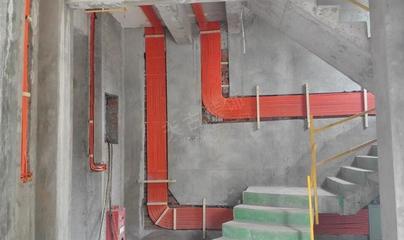
As electrical contractors, we work with cables every day. From procurement and installation to final inspection, every step directly impacts project safety, cost-efficiency, and delivery timelines.
However, faced with a market flooded with “National Standard” and “Non-standard” products, and ever-evolving building requirements, how do you make the optimal choice? Today, we break down a practical, actionable guide covering cable selection, procurement, and installation.

1, Procurement Basics: Use a Checklist to Secure Quality
Cable procurement shouldn’t be about “who is cheapest.” A practical Cable Procurement Self-Inspection Checklist can help you avoid 80% of the risks. Key points include:
Conductor Material: Opt for oxygen-free copper (OFC) for low resistance and high conductivity. Beware of “Copper-Clad Aluminum (CCA),” which is prone to overheating over time.
Actual Cross-Section: Use calipers to measure and ensure the cable isn’t “short-weight.
Insulation & Sheath Thickness: Must comply with GB/T 12706 standards. Too thin, and it risks aging and breakdown.
Certification: Look for CCC certification. Critical projects may also require flame-retardant grade reports (e.g., ZR, NH).
Profesional Tip: Create a PDF version of this checklist and tick off items during procurement to eliminate “gut feeling” decisions.
2.The Hidden Cost of “Non-Standard” Cables
Many contractors use “Non-standard” cables to cut costs, but the price is high.
Technical: Higher resistance leads to increased power loss and heat generation.
Financial: Higher electricity bills over the long term.
Safety & Legal: Overheating can cause fires. Worse, if caught during inspection, you face removal orders, rework costs (which far exceed material savings), and potential legal liability.
Case in Point: A commercial project once used substandard BV wire, leading to insulation cracking. The result? The entire floor had to be rewired, costing over 200,000 RMB in losses. Quality is a baseline, not a cost center.
3.Scenario-Based Selection: There is No “One-Size-Fits-All”
Different buildings have vastly different power demands. Choose the right cable for the environment:
Hospitals: Life support systems require high reliability. Use flame-retardant and fire-resistant cables (NH type) to ensure operation even after a power outage.
Schools & Malls: High personnel density requires Low Smoke Zero Halogen cables (WDZ type) to minimize toxic smoke in case of fire.
Industrial Plants: High motor usage and interference may require shielded cables or conduit protection.
4.Prefabricated Branch Cables: The “Invisible” Efficiency Boost
Traditional cabling requires on-site branching and splicing, which is time-consuming. Prefabricated branch cables are pre-assembled in a factory, allowing for direct installation on-site.
Efficiency: Installation speed increases by over 50%.
Reliability: Reduces connection failure points.
Best For: High-rise residential buildings and commercial complexes.
Cost Analysis: While material costs may be slightly higher, the savings in labor, time, and quality assurance make it a long-term winner.
5.Installation Standards = Controlling “Hidden” Costs
Cable installation isn’t just about “dragging it over there.”
Bending Radius: Too small a radius damages the insulation.
Heat Dissipation: Laying multiple cables too close without spacing reduces current carrying capacity.
Tension: Excessive pulling force can break the conductor.
These “minor issues” add up. At best, they increase energy loss; at worst, they cause short circuits. Remember: Standard installation is how you save on future maintenance costs.
6. Pre-Handover Check: Think Like the Inspector
When the client and supervisor conduct the final inspection, what are they looking for?
Documentation: Are the Certificates of Conformity and test reports complete?
Testing: On-site sampling for insulation resistance testing.
Workmanship: Check cable routing, fixing intervals, and bending radii.
Conduct your own audit beforehand to avoid being “stalled at the last hurdle.”
7. Future Trends: Green Buildings Need “Low-Carbon” Cables
Standards like LEED and China’s 3-Star Green Building are becoming more common. Low smoke zero halogen, B1 grade flame retardant, and recycled material cables are becoming the norm. PV cables and EV charging cables are also appearing frequently in new builds. Getting ahead of the curve on green products isn’t just about compliance; it’s a demonstration of your technical capability.
Let’s Discuss:
Have you ever “fallen into a pit” regarding cable selection or installation on a project? Share your story in the comments so we can all learn and avoid these pitfalls together.
[Guangxi Dahua Qunshan Cable] – Dedicated to Wire & Cable Solutions, safeguarding project safety and efficiency.